
Halal intimacy, rooted in Islamic teachings, guides couples toward a fulfilling and permissible marital life. Resources like Abdullateef Abdullah’s book offer invaluable insights.
Understanding Islamic principles is crucial for building a strong, loving, and spiritually sound relationship. GoodSpouse and similar platforms aid in this journey.
This exploration focuses on marriage and prospective couples, emphasizing love, respect, and boundaries within the framework of Islamic guidance for a blessed union.
The Importance of Islamic Guidance
Islamic guidance is paramount in navigating the complexities of intimacy, providing a framework rooted in divine wisdom and moral principles. Resources like “Halal Intimacy from the Islamic Perspective” by Abdullateef Abdullah serve as essential tools for understanding permissible boundaries and fostering a spiritually fulfilling connection.
The Quran and Sunnah offer comprehensive teachings on marriage, love, and physical affection, emphasizing the importance of mutual respect, compassion, and safeguarding the sanctity of the marital bond. Seeking guidance from Islamic scholars and imams ensures adherence to these principles, preventing unlawful intimacy (zina) and promoting a halal relationship.
This guidance isn’t restrictive but liberating, offering a path to genuine intimacy built on a foundation of faith, trust, and shared values. Platforms like GoodSpouse reinforce this by promoting halal matrimony and providing resources for couples seeking to build a strong, Islamic marriage.
Scope of Discussion: Marriage and Prospective Couples
This discussion centers on halal intimacy within the sacred bond of marriage, and extends to guidance for prospective couples navigating the path towards it. Resources like Abdullateef Abdullah’s work provide crucial insights for both stages, emphasizing the importance of establishing clear boundaries and intentions.
For those considering marriage, the focus is on respectful courtship, avoiding unlawful intimacy, and building a foundation of emotional connection. “Love, Inshallah” highlights the need to pause, reset boundaries, and seek mentorship when facing challenges in dating.
Within marriage, the discussion encompasses permissible acts of physical affection, hygiene, and addressing challenges while upholding Islamic principles. Platforms like GoodSpouse support this journey, offering resources for building a fulfilling and halal marital life.

Foundations of Halal Intimacy in Islam
Islamic foundations for intimacy stem from the Quran and Sunnah, emphasizing love, compassion, and respect within marriage. Abdullateef Abdullah’s book clarifies these principles.
The Quranic Perspective on Marriage
The Quran views marriage (Nikah) as a sacred covenant (Mithaq), establishing a bond of love, mercy, and tranquility between spouses. It’s a means of fulfilling natural desires within lawful boundaries, preventing societal ills like adultery (Zina). Quranic verses emphasize mutual respect, kindness, and fulfilling each other’s rights.
Surah Ar-Rum (30:21) highlights divine signs in marital harmony, fostering emotional and physical connection. The Quran encourages spouses to find comfort and solace in each other, promoting a deep and lasting bond. This perspective, detailed in resources like “Halal Intimacy from the Islamic Perspective,” underscores marriage as a foundation for a righteous society.
Understanding these Quranic principles is vital for building a halal and fulfilling intimate life, guided by divine wisdom and compassion.
The Sunnah and Intimacy
The Sunnah, the teachings and practices of Prophet Muhammad (peace be upon him), beautifully complements the Quranic guidance on marriage and intimacy. He emphasized tenderness, affection, and fulfilling the needs of one’s spouse, fostering a loving and harmonious relationship. Stories from the Prophet’s life demonstrate respectful and considerate behavior towards his wives.
The Sunnah provides practical examples of permissible physical affection and encourages maintaining purity (Taharah) before intimacy. Resources like Abdullateef Abdullah’s book delve into these details, offering a comprehensive understanding of halal intimacy. The Prophet’s teachings promote open communication and mutual consent within marriage.
Following the Sunnah ensures a spiritually enriching and fulfilling intimate life, aligned with Islamic values and principles.
Core Principles: Love, Compassion, and Respect
At the heart of halal intimacy lie the core Islamic principles of love (mahabbah), compassion (rahmah), and mutual respect (ihsan). These aren’t merely sentiments, but foundational pillars for a thriving marital bond. The Quran and Sunnah consistently emphasize kindness, empathy, and understanding between spouses.
Love fosters emotional connection, while compassion nurtures a supportive and forgiving environment. Respect acknowledges the inherent dignity and worth of each partner, preventing abuse or mistreatment. Resources like “Halal Intimacy from the Islamic Perspective” by Abdullateef Abdullah highlight these principles.
Cultivating these qualities creates a sacred space where intimacy flourishes, guided by Islamic ethics and spiritual growth.

Boundaries and Permissibility (Halal)

Islamic law clearly defines halal (permissible) and haram (forbidden) acts of intimacy. Avoiding unlawful intimacy, or zina, is paramount, with nikah establishing lawful boundaries.
Defining Halal and Haram in Intimacy
Within the Islamic framework, intimacy is profoundly governed by the principles of halal (permissible) and haram (forbidden). Understanding these distinctions, as detailed in resources like Abdullateef Abdullah’s work, is fundamental for Muslims. Halal intimacy is exclusively within the sacred bond of marriage, fostering love, compassion, and mutual respect.
Conversely, any physical or emotional intimacy outside of marriage is considered haram, specifically zina, which carries severe spiritual and societal consequences. This includes premarital relationships, adultery, and any form of sexual activity lacking a valid marriage contract. The boundaries are not merely about physical acts, but also encompass intentions and behaviors that could lead to unlawful intimacy.
Maintaining these boundaries is a demonstration of faith, obedience to Allah, and respect for the sanctity of marriage. Clear understanding and adherence to these principles are essential for a fulfilling and spiritually rewarding intimate life within the Islamic tradition.
Avoiding Unlawful Intimacy (Zina)
Zina, encompassing all forms of unlawful sexual relations, is strictly prohibited in Islam. Resources like “Halal Intimacy from the Islamic Perspective” emphasize the gravity of this prohibition and the importance of safeguarding oneself. Avoiding zina requires conscious effort, including guarding one’s gaze, modest dress, and avoiding secluded environments with members of the opposite gender.
For prospective couples, establishing firm boundaries is crucial. As highlighted by Love, Inshallah, pausing, resetting boundaries, and agreeing on concrete next steps prevent emotional drift and unilateral decisions. Seeking guidance from a wise mentor or Imam when facing challenges preserves dignity and maintains a steady, halal path.
Protecting oneself from temptation and seeking Allah’s protection through prayer and righteous deeds are vital. Remembering the consequences of zina, both in this life and the hereafter, serves as a powerful deterrent.
The Role of Nikah (Marriage Contract)
The Nikah, or marriage contract, is the foundational pillar of halal intimacy in Islam. It legally and religiously sanctions the intimate relationship between a husband and wife, removing any element of unlawfulness. “Halal Intimacy from the Islamic Perspective” by Abdullateef Abdullah underscores the significance of a valid Nikah as a prerequisite for permissible physical and emotional connection.
The contract outlines the rights and responsibilities of both spouses, fostering a framework of mutual respect and understanding. It establishes the boundaries within which intimacy is permissible, safeguarding against zina and ensuring a blessed union; A properly executed Nikah provides security and peace of mind.
Understanding the conditions of a valid Nikah – including consent, witnesses, and mahr (dowry) – is essential for ensuring its legitimacy.
Building Emotional Connection
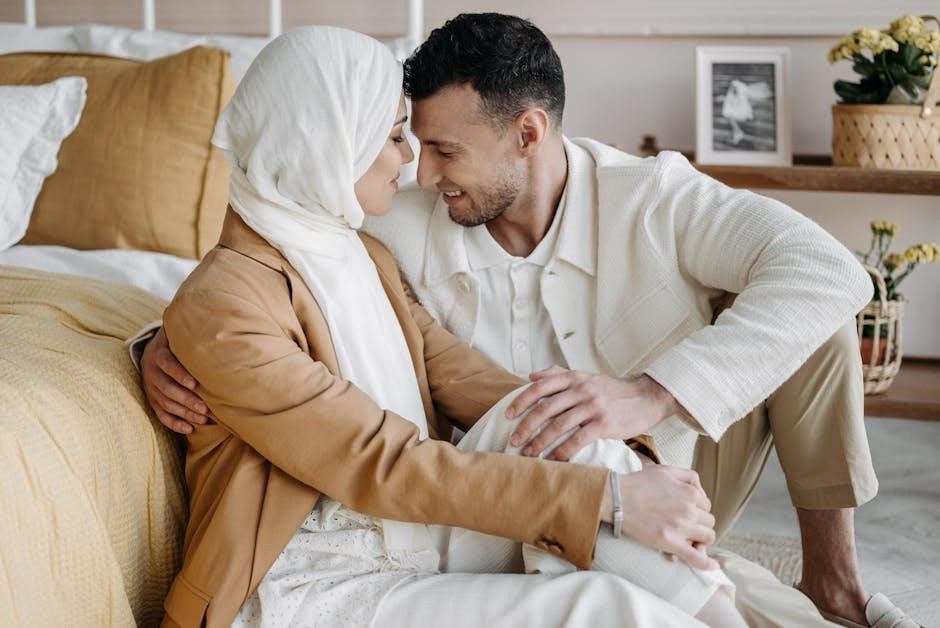
Cultivating emotional intimacy requires consistent communication, deep understanding, and unwavering compassion between spouses, as highlighted in Islamic teachings and resources.
Strengthening the marital bond through shared experiences and mutual support is vital, guided by principles found in texts like Abdullah’s work.
Seeking guidance from Islamic scholars provides valuable insights for navigating challenges and fostering a lasting, loving connection.
Communication and Understanding
Open and honest communication forms the bedrock of a thriving halal marriage. Islamic teachings emphasize the importance of spouses expressing their needs, desires, and concerns respectfully. Abdullateef Abdullah’s “Halal Intimacy” underscores this, advocating for a safe space where vulnerability is embraced, not feared.
Active listening is paramount; truly hearing your partner’s perspective, even when differing, fosters empathy and strengthens the bond. Understanding each other’s emotional landscapes requires patience and a genuine desire to connect on a deeper level. Resources from platforms like GoodSpouse reinforce the need for consistent dialogue.
Navigating disagreements constructively, guided by Islamic principles of kindness and forgiveness, prevents resentment from building. Clear communication about boundaries – particularly for prospective couples – is crucial, as highlighted in articles on halal dating, ensuring mutual respect and preventing misunderstandings;

Strengthening the Marital Bond
Cultivating a strong marital bond within an Islamic framework requires intentional effort and shared commitment. “Halal Intimacy from the Islamic Perspective” by Abdullateef Abdullah emphasizes nurturing love, compassion, and mutual respect as foundational elements. Regularly dedicating quality time – free from distractions – allows couples to reconnect and deepen their emotional intimacy.
Shared spiritual practices, such as praying together and reflecting on Islamic teachings, can foster a sense of unity and purpose. Expressing gratitude for one another’s presence and contributions reinforces positive feelings. Seeking guidance from Islamic scholars or imams, as suggested in resources on halal dating, provides valuable support.
Remembering key milestones and celebrating successes, both big and small, demonstrates appreciation and strengthens the emotional connection. Proactively addressing challenges with patience and understanding, guided by Islamic principles, builds resilience and fosters a lasting bond.
Seeking Guidance from Islamic Scholars
Navigating the complexities of halal intimacy often benefits from the wisdom of knowledgeable Islamic scholars. Resources like “Halal Intimacy from the Islamic Perspective” by Abdullateef Abdullah provide a strong foundation, but personalized guidance can address unique circumstances. Imams and qualified scholars offer interpretations of Islamic teachings relevant to marital intimacy.
When facing challenges or uncertainties, seeking counsel ensures alignment with Islamic principles. Platforms like GoodSpouse highlight the importance of informed decision-making. Scholars can clarify permissible boundaries and offer advice on fostering emotional and physical connection within marriage.
This proactive approach demonstrates a commitment to upholding Islamic values and strengthening the marital bond. Mentorship from a wise individual, as suggested for dating couples, can provide steady guidance and preserve dignity throughout the process.
Physical Intimacy within Marriage
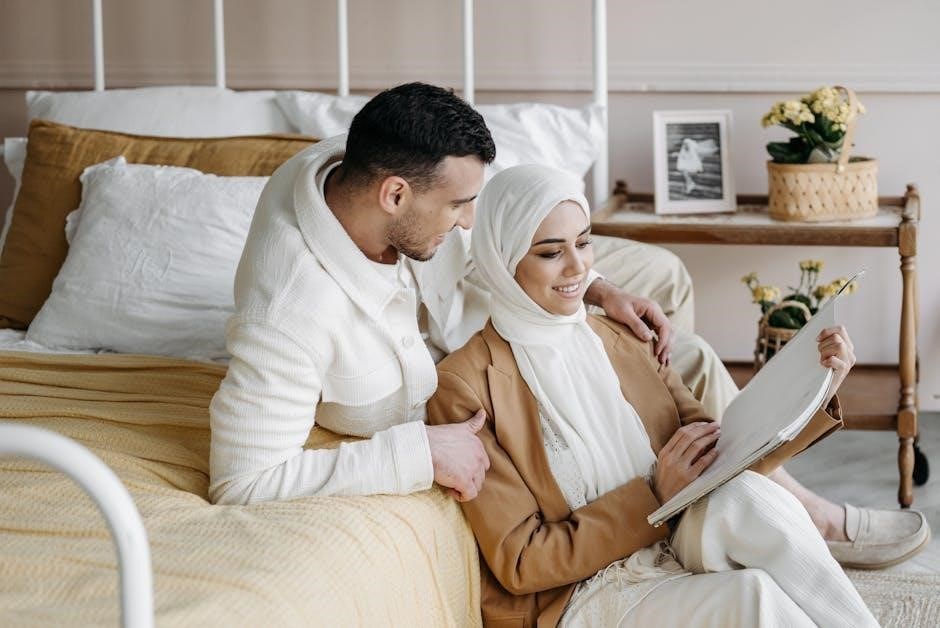
Islamic teachings permit acts of physical affection within the bounds of marriage, emphasizing taharah (purity) and mutual consent. Abdullateef Abdullah’s work details these permissible acts.
Addressing challenges requires open communication and seeking guidance to maintain a fulfilling and halal intimate life, respecting Islamic principles.
Permissible Acts of Physical Affection
Within the sacred bond of marriage, Islam permits a range of physical expressions of love and affection. These acts, when performed with mutual consent and respect, strengthen the marital connection and foster intimacy. Abdullateef Abdullah’s “Halal Intimacy from the Islamic Perspective” provides detailed guidance on these permissible acts, emphasizing their importance in a halal relationship.
Permissible expressions include embracing, kissing, and intimate relations, all conducted within the boundaries defined by Islamic teachings. Maintaining purity (taharah) through ritual cleansing is also a crucial aspect, ensuring a spiritually and physically fulfilling experience. These acts are not merely physical; they are a means of expressing love, building emotional closeness, and fulfilling the natural desires within the framework of a lawful marriage.
The key is to approach intimacy with reverence, mindful of the sacredness of the marital bond and adhering to the principles of modesty and respect outlined in Islamic scripture.
Hygiene and Purity (Taharah)
Taharah, encompassing both physical and spiritual purity, is a cornerstone of halal intimacy in Islam. It’s not merely about cleanliness, but a state of ritual purification essential before engaging in intimate acts. “Halal Intimacy from the Islamic Perspective” by Abdullateef Abdullah deeply explores the significance of taharah, detailing the prescribed methods for achieving it.
This includes performing wudu (ablution) and ghusl (full ritual bath) after major impurities, such as menstruation or sexual intercourse. Maintaining hygiene demonstrates respect for one’s spouse and elevates the act of intimacy to a sacred experience. It’s a demonstration of devotion and adherence to Islamic principles.
Taharah fosters a sense of spiritual connection and ensures that intimacy is approached with reverence and mindfulness, aligning with the overall Islamic ethos of modesty and purity.
Addressing Challenges in Physical Intimacy
Challenges in physical intimacy are common in any marriage, and Islamic teachings offer guidance for navigating them with compassion and understanding. “Halal Intimacy from the Islamic Perspective” by Abdullateef Abdullah acknowledges these difficulties and provides practical advice rooted in Islamic principles.
Open communication is paramount; couples should feel comfortable discussing their needs and concerns respectfully. Seeking counsel from a knowledgeable Islamic scholar or counselor can provide valuable insights and solutions. Addressing underlying emotional or psychological factors is crucial for resolving intimacy issues.
Patience, empathy, and a commitment to mutual satisfaction are essential. Remember that intimacy is a multifaceted aspect of marriage, encompassing emotional connection alongside physical expression.

Navigating Intimacy: Practical Considerations
For prospective couples, establishing clear boundaries is vital, pausing to reset them when needed, and avoiding drifting into impermissible intimacy. Seek mentorship!
Imam guidance offers wisdom, preserving dignity and ensuring a steady, halal path toward marriage, guided by Islamic principles and mutual respect.
Establishing Boundaries in Dating (for Prospective Couples)
Navigating the pre-marital period requires intentionality and adherence to Islamic guidelines. Halal dating isn’t mimicking mainstream practices; it’s about respectfully exploring compatibility within permissible limits. Clear boundaries are paramount, safeguarding both individuals from crossing into unlawful intimacy (zina).
This includes limiting physical contact, avoiding private settings, and prioritizing conversations focused on values, character, and shared life goals. Regularly assess and reset these boundaries to ensure alignment with Islamic principles and personal comfort levels. Unclear timelines can lead to drift, so agree on concrete next steps.
When facing challenges, seeking guidance from a wise mentor or local Imam is invaluable, preserving dignity and maintaining a steady, halal course. Remember, the goal is a righteous marriage built on a foundation of respect and Islamic principles.
Resetting Boundaries and Avoiding Drift

Maintaining halal boundaries in courtship isn’t a one-time event; it requires continuous evaluation and adjustment. As the relationship progresses, revisit initial agreements to ensure they still align with Islamic principles and individual comfort. Recognize that emotional intimacy can escalate quickly, potentially leading to boundary violations if unchecked.
Proactively pause and reassess the level of intimacy, especially if feelings intensify. Avoid unilateral decisions that could compromise the halal framework. Drift occurs when boundaries are subtly eroded over time, often unintentionally.
Regular communication and mutual accountability are vital. If disagreements arise, seek guidance from a trusted mentor or Imam to navigate the situation with wisdom and maintain a steadfast commitment to a halal path towards marriage.
Seeking Mentorship and Imam Guidance
Navigating the complexities of halal intimacy often benefits from external wisdom. A knowledgeable mentor – a married couple known for their strong Islamic values – can offer practical advice and support. Imams possess deep understanding of Islamic jurisprudence and can provide guidance on specific questions or concerns related to permissible interactions.
Don’t hesitate to seek their counsel when facing difficult decisions or encountering unclear situations. Mentors can help identify potential pitfalls and reinforce the importance of adhering to Islamic boundaries.
Imam guidance ensures alignment with authentic Islamic teachings, preventing unintentional violations of halal principles. This proactive approach fosters a spiritually grounded relationship built on respect, understanding, and a shared commitment to pleasing Allah.

Resources and Further Reading
Abdullateef Abdullah’s “Halal Intimacy” is a key resource, alongside online Islamic books and articles. GoodSpouse offers valuable insights for halal relationships.
“Halal Intimacy from the Islamic Perspective” by Abdullateef Abdullah
Abdullateef Abdullah’s book is a comprehensive guide examining intimate relationships through the lens of Islamic teachings and principles. Published by DARUSSALAM US, it strives to provide advice and ideas for sustaining a connection that is both halal (permissible) and deeply rewarding.
The book delves into various facets of intimacy, including marriage, love, and physical closeness, all within the boundaries set by Islam. It’s a valuable resource for both married couples and those considering marriage, offering practical guidance on navigating intimacy in a way that honors Islamic values. Available as a PDF, it provides accessible knowledge for those seeking a deeper understanding.
This work aims to foster a fulfilling and spiritually sound marital life, emphasizing the importance of adhering to Islamic principles while nurturing a loving and intimate bond between partners. It’s a cornerstone resource for anyone interested in halal intimacy.
Online Islamic Books and Articles
Numerous online resources complement Abdullateef Abdullah’s book, offering further exploration of halal intimacy from an Islamic perspective. Websites and digital libraries host articles and downloadable PDFs addressing various aspects of marital relationships within Islamic guidelines.
Platforms like GoodSpouse provide blog posts and articles discussing intimacy, communication, and building a strong marital bond. Searching for “halal intimacy PDF” yields a range of materials, though verifying the source’s authenticity and adherence to sound Islamic scholarship is crucial.
These online resources offer accessible knowledge for those seeking guidance on navigating intimacy in a halal manner. They supplement traditional texts and provide contemporary perspectives on fostering a loving and fulfilling marital life, grounded in Islamic principles.
GoodSpouse and Similar Platforms
GoodSpouse emerges as a valuable resource for those seeking guidance on halal intimacy, offering a modern approach to Islamic marriage and relationship advice. Alongside similar platforms, they provide articles and resources focused on building emotionally and physically connected, permissible relationships.
These platforms often feature content addressing the nuances of intimacy within the Islamic framework, drawing upon Quranic teachings and the Sunnah; They can serve as a starting point for exploring topics like communication, boundaries, and fostering a loving marital bond.
While not direct repositories for “halal intimacy PDF” downloads, they curate relevant information and connect individuals with resources that align with Islamic principles, promoting healthy and fulfilling marriages.